
Criminal Cases in the Greene County Courts
Greene County is Pennsylvania's 13th Judicial District. Greene County Magisterial District Judges handle preliminary arraignments, set bail, conduct preliminary hearings, and decide summary matters. When a felony or misdemeanor is held for court, the case advances to the Greene County Court of Common Pleas. The Commonwealth then files the charging information, and the Common Pleas record tracks formal arraignment, motions, plea or trial, disposition, sentence, financial assessments, and later proceedings.
The Greene County Clerk of Courts is the custodian of the county criminal case file. The office is on the first floor of the Greene County Courthouse at 10 East High Street, Waynesburg, PA 15370. Its counter is open Monday through Friday from 8:30 a.m. to 4:30 p.m., and staff can be reached at 724-852-5281 or 724-852-5282. Ask the Clerk, not the arresting agency, for filed motions, orders, judgments, or certified court copies.
Search Greene County Dockets Together
A Greene County criminal case may begin on a Magisterial District Court docket and later receive a separate Common Pleas number. Search both levels. An MDJ file may be the only public court trail when charges were dismissed at the preliminary hearing. For a case held for court, the lower docket helps identify the early events while the Common Pleas docket carries the later prosecution.
The official UJS Case Search screen is the free statewide entry point. The captured portal view below shows the government source a reader should use instead of a copied docket found through a general web search.
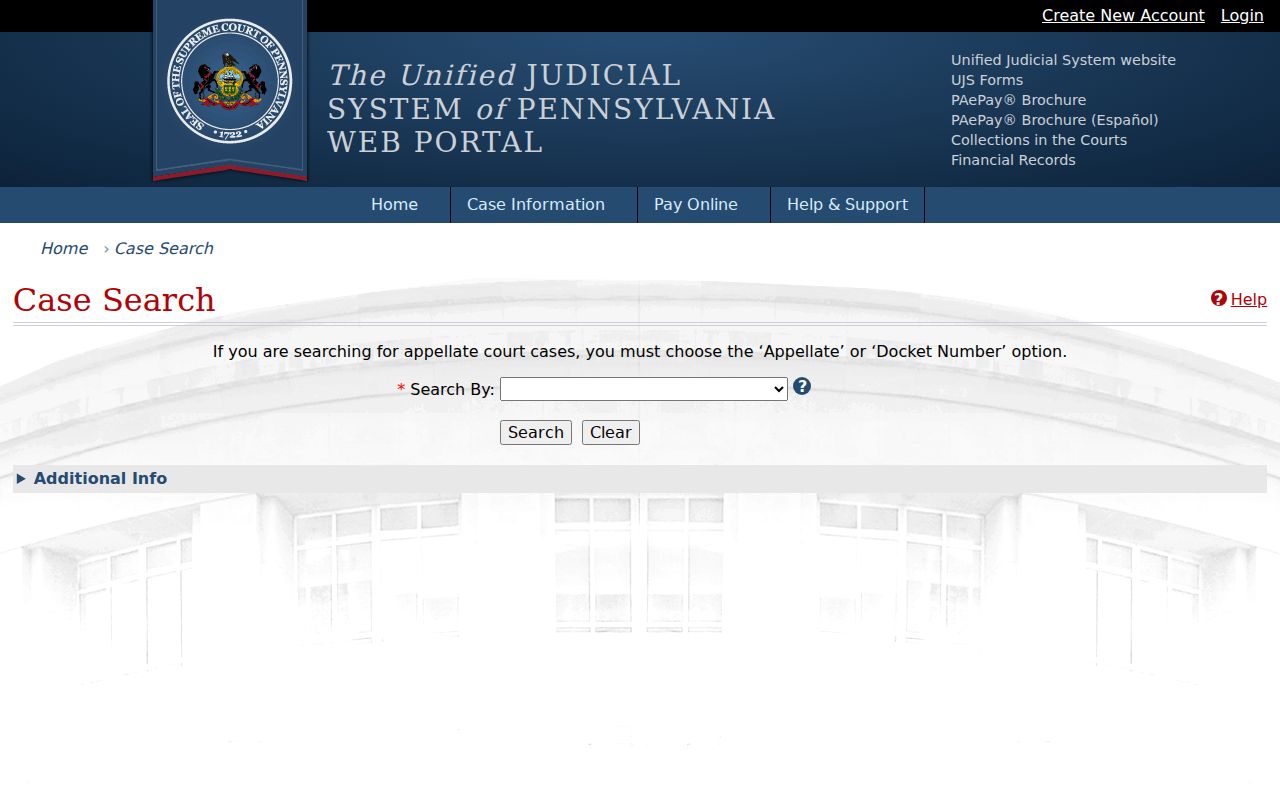
Selecting Greene County and the correct court type keeps same-name results manageable. An exact docket number or OTN is safer than a name alone because it connects the search to one proceeding.
How to Search Case Records
Start with the strongest identifier available. Names can be misspelled, abbreviated, or shared by several people. If a narrow search fails, remove a middle initial, broaden the filed-date range, and repeat the search at the other court level. Recent entries can lag, so a portal miss is not final.
- Open UJS Case Search and choose either Magisterial District Courts or Court of Common Pleas.
- Select Greene County, then search by docket number, OTN, or participant name.
- Use the filed-date range, case status, and case type controls to separate similar results.
- Open the public docket sheet and read the charge-line dispositions, event list, bail, and sentence entries.
- Give the docket number and document title to the Clerk when requesting an underlying or certified filing.
| Field Label | Type | Required | Notes |
|---|---|---|---|
| Search type | Tab or radio | Yes | Participant Name, Docket Number, Organization, or OTN varies by context |
| Court type | Dropdown | Yes | Choose Common Pleas or Magisterial District |
| County | Dropdown | Narrowing field | Select Greene |
| Docket number | Text or components | Alternate | Best exact identifier |
| Participant name | Text | Alternate | Spelling matters; broaden after a miss |
| Date filed | Date range | Optional | Helps reduce same-name results |
| Case status or type | Dropdown | Optional | Options depend on court level |
The official UJS search help explains the controls shown in this captured reference.
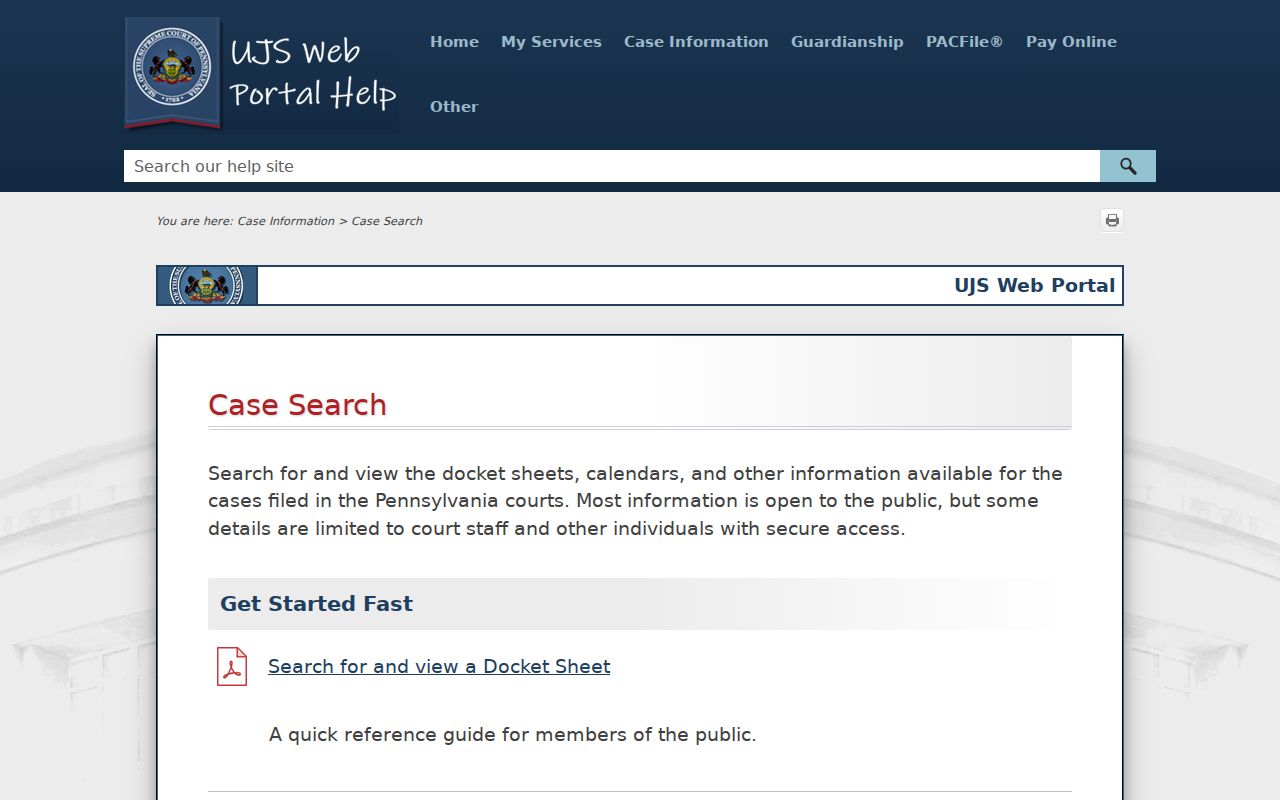
The help page is useful when the available fields change with court type. It also reinforces that the docket service is a case-information tool, not an official PSP criminal-history response.
Greene County Paper Docket Fallback
The Greene County Clerk's published history creates a firm search boundary. Criminal docket automation began in 1996, but old dockets remain at the courthouse and the local index reaches back to 1796. A UJS miss for a prosecution from before automation is therefore a prompt to call or visit the Clerk. It does not prove that no Greene County court record exists.
Provide the defendant's name, approximate year, and a Greene County docket number when known. For a visible online event whose document is not downloadable, add the filing date and exact document title. Ask for current copy and certification costs before ordering because the research did not locate a verified Greene County fee schedule. Call 724-852-5282 to confirm whether a research appointment is needed. The Clerk's official page documents the Greene County record counter and its unusually deep index.
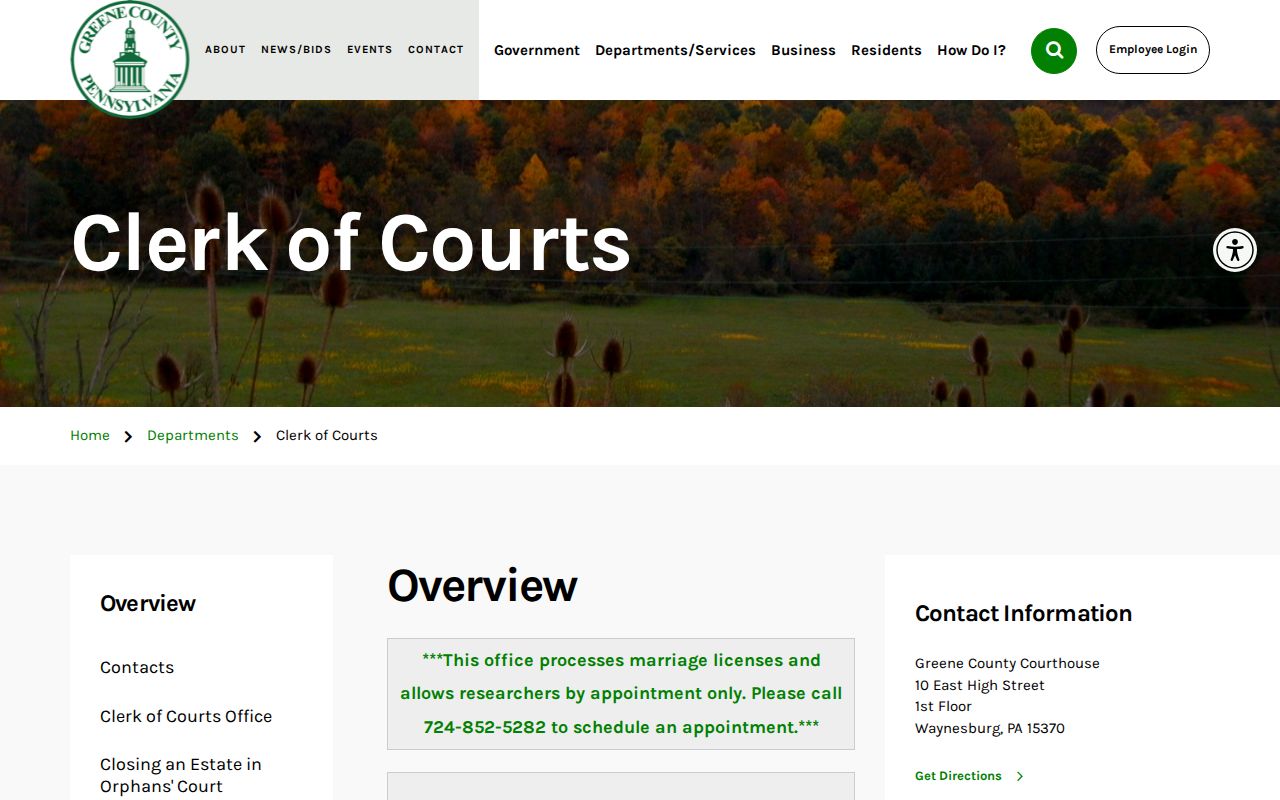
This county source is the correct fallback for archived files and certified court documents that the statewide portal does not deliver.
What the Case File Shows
A Greene County public docket sheet is an index and chronology for one case. It can identify participants, counsel, charges, bail, scheduled events, filed entries, disposition, and financial information. Underlying motions, exhibits, and other filings are not always available as downloads. Police reports and probable-cause narratives also remain with the agency that created them unless filed in the court record.
| Case Number & Court | Identifies the docket, Greene County court level, filing date, caption, and case status. |
|---|---|
| Charging Document | Lists filed counts, statute citations, offense descriptions, grades, and later charge outcomes. |
| Docket Entries | Records complaints, hearings, information, motions, orders, pleas, trial events, and later filings. |
| Hearing Dates | Shows calendar events, dates, times, and courtroom or judge when entered. |
| Disposition & Judgment | States whether a count was withdrawn, dismissed, acquitted, resolved by plea, or found guilty. |
| Sentence & Conditions | Records the sentence and may show costs, restitution, payments, and balances. |
Note: A financial balance may combine costs and restitution with fines, so the total should not be labeled as a fine without checking the entries.
Read Greene County Charge Grades
Read each charge line through its final disposition. The first page can preserve counts from the original complaint even when some were later amended, withdrawn, or dismissed. Pennsylvania labels offenses by grade, such as felony one, misdemeanor two, or summary. That grade is not the outcome. It identifies the statutory offense level, while the disposition field tells what happened to that count.
- Held for court
- A preliminary result sending a charge from the MDJ level toward Common Pleas, not a conviction.
- Nolo contendere
- A plea in which the defendant does not contest the charge; the docket records the resulting disposition.
- Withdrawn or dismissed
- A count that did not end in a finding of guilt on that docket line.
- Closed
- An administrative case status that does not, by itself, explain the final outcome.
When identity or outcome matters, match the docket number and dates, then verify the filed order. A name alone cannot establish that a Greene County case belongs to a particular person.
Stages of a Criminal Case
A typical Greene County prosecution starts with a complaint and preliminary arraignment before an MDJ. The judge addresses bail, then conducts or schedules a preliminary hearing. Charges may be dismissed, waived, or held for court. A held case proceeds to Common Pleas for the information, formal arraignment, pretrial litigation, and a plea or trial. Sentencing and post-sentence filings follow a guilty disposition.
Case flow: Charges Filed › Arraignment › Pretrial › Plea or Trial › Disposition › Sentencing
Not every case reaches every stage. A preliminary dismissal can end the lower-level proceeding, and a plea can bypass trial. For the complete chronology, follow the event list and the disposition beside each charge rather than assuming the flow line predicts a specific result.
Bail on Greene County Dockets
Bail answers whether and under what terms a person may be released while the case is pending. It is not a decision on guilt. Greene County Prison states that the District Magistrate sets bail at arraignment. During business hours, bail may be posted at the arraigning magistrate's office; after hours, the on-call magistrate sets the time and place. A docket can show bail type, amount, and status when public.
For current physical custody, use the prison lookup or call the facility rather than relying on a court entry. For the case result, use the charge disposition and judgment. The broader Greene County arrest history route explains why a booking record and a court outcome must be checked separately.
Three Greene County Case Files
The Clerk, District Attorney, and Public Defender work on the same prosecution but do not hold interchangeable files. The Clerk keeps the judicial record. The DA's office keeps prosecution and investigative work product subject to its own access limits. The Public Defender keeps client material and processes applications for appointed counsel. A request for a public docket or certified judgment belongs with the Clerk.
The Greene County Public Defender page identifies the courthouse office and application route.
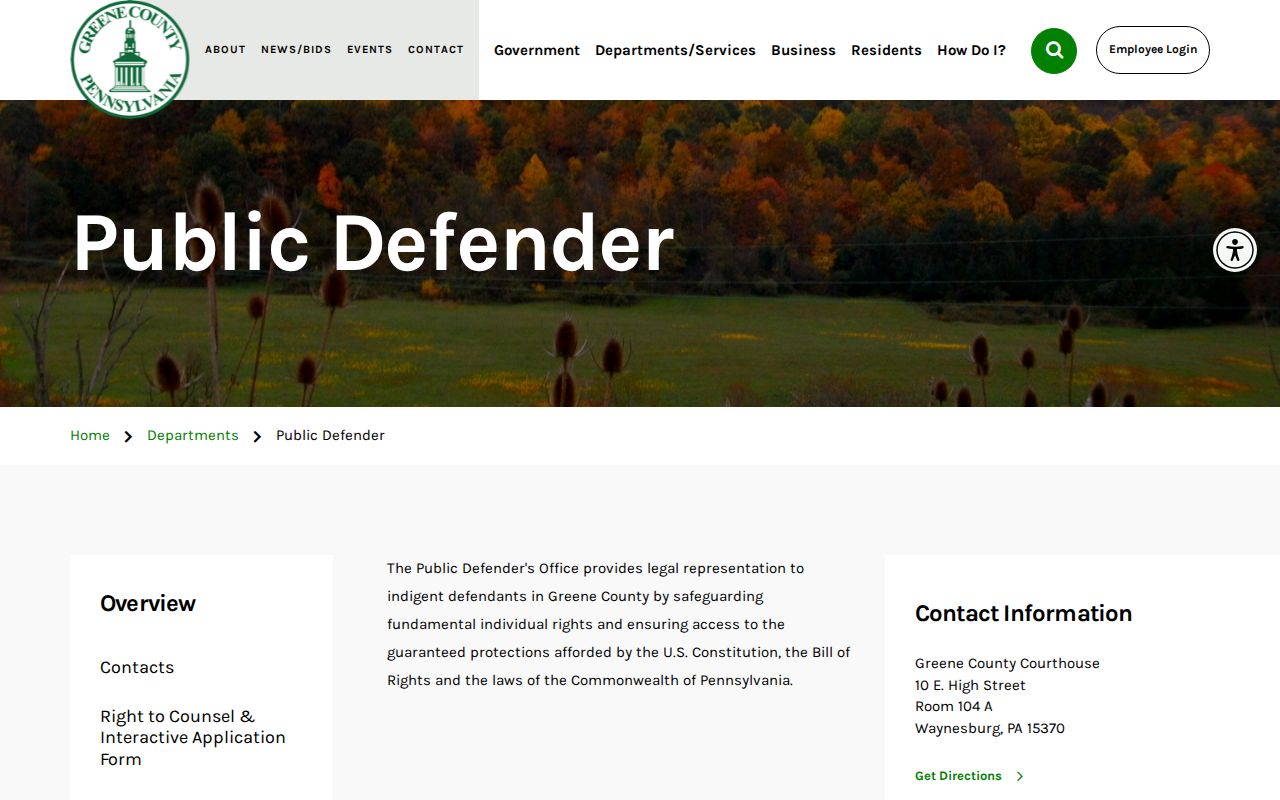
That office may provide legal representation to an approved applicant, but it is not a public archive for someone else's criminal case documents.
Greene County Federal Court Layer
Federal prosecutions arising in Greene County belong to the U.S. District Court for the Western District of Pennsylvania, not the county Common Pleas docket. PACER requires registration and provides federal docket information under its current fee and waiver rules. Federal sealed cases and warrants may not be publicly searchable, and a federal docket will not appear merely by switching court levels in UJS.
The official PACER service is the authoritative online federal docket route.
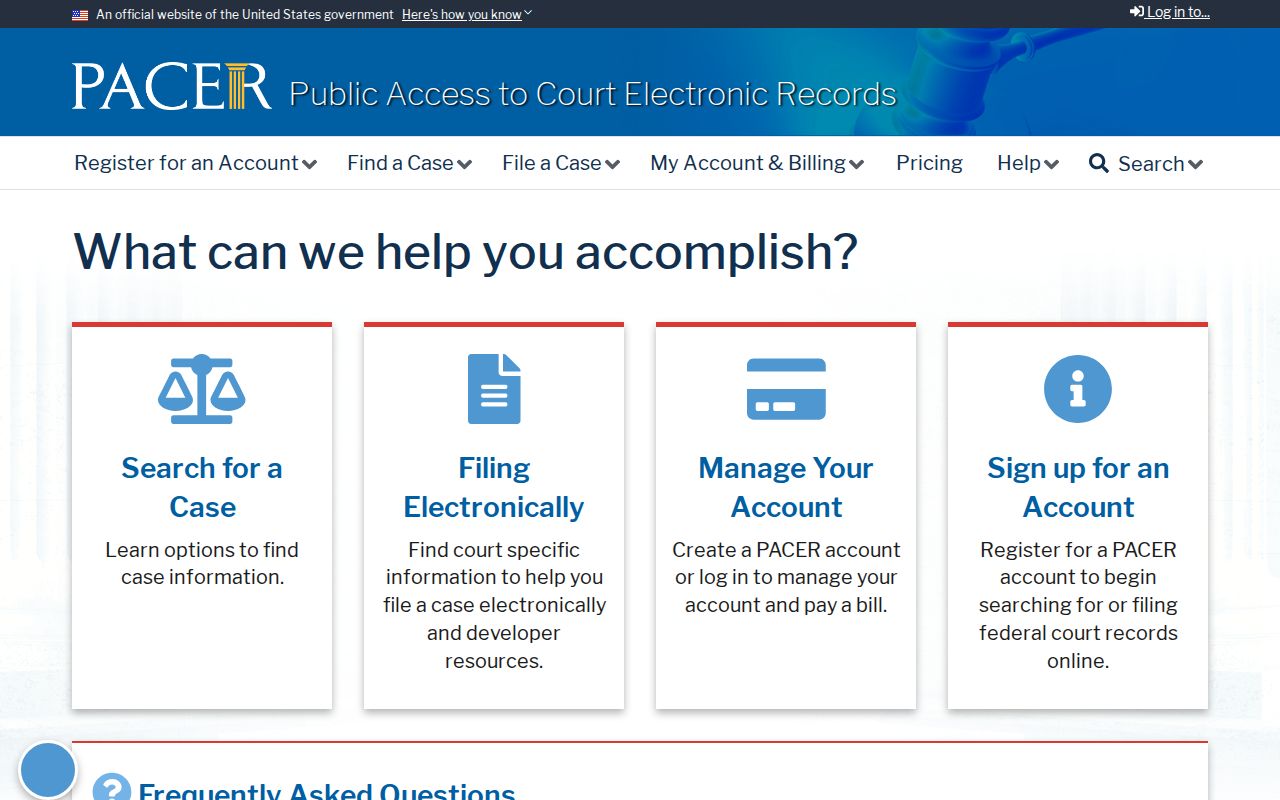
This federal layer should be searched only when the proceeding is in federal court. It does not replace the Greene County Clerk or UJS for a Pennsylvania prosecution.
Access & Restrictions
Pennsylvania court records begin with a policy of public access, but not every case or field is public. Juvenile and adoption matters are impounded or sealed under separate rules. Expunged, limited-access, and other restricted proceedings will not become visible because a name search is broadened. Confidential identifiers, victim data, medical information, and protected material may be omitted or redacted from the electronic view.
The Pennsylvania judiciary public-records route explains requests for judicial records. Ordinary agency records fall under different rules, and law-enforcement audio or video follows Act 22. If a known Greene County case does not appear, try both court levels, check spelling and dates, then contact the Clerk. For an underlying filing, provide its docket number and filing date. For a police narrative, contact the originating police agency instead.
Key distinction: UJS warns that a public docket sheet is not a Pennsylvania State Police criminal-history check. Use PATCH when an official repository response is the actual need.